The Basics of Hair Dryer Technology
Invented in the early 20th century, the hair dryer is one of the most popular tools in both homes and salons today. While its purpose is straightforward—quickly drying hair after washing—the science and technology inside these devices reflect decades of progress in materials, engineering, and design.
Key Components Inside a Hair Dryer
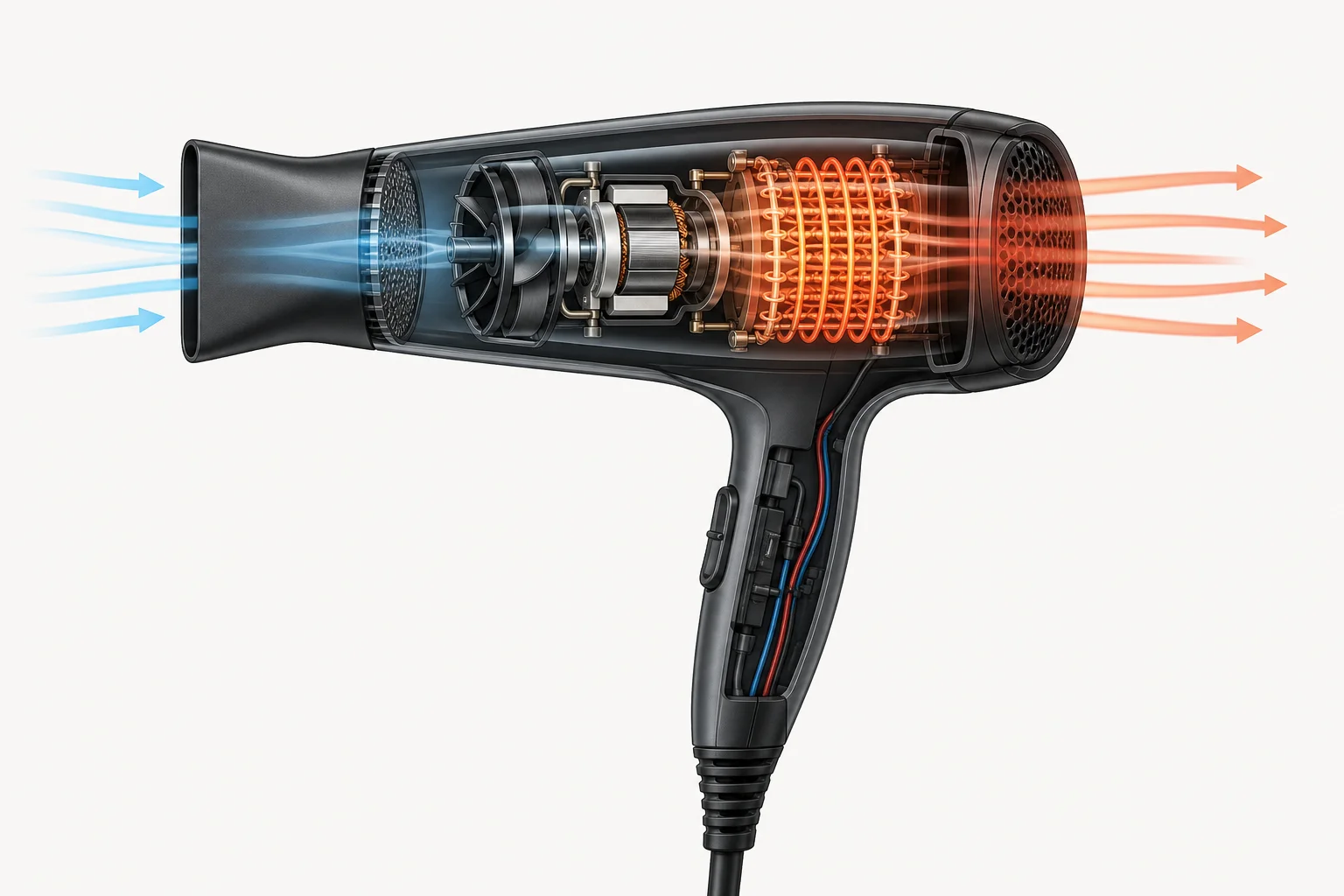
A typical hair dryer consists of several main parts: a motor, a fan, a heating element, and a protective casing. The motor powers the fan, which draws in air through the intake at the back of the dryer. As the fan pushes air over the electric heating element, the air heats up and is forced out through a nozzle toward the user’s hair.
Heating Elements and Airflow
Traditional models often use a resistance coil made of nichrome, a nickel-chromium alloy, which heats rapidly and withstands high temperatures. The warm air generated is essential for breaking down water molecules in hair, speeding up the drying process. High-end models may feature ceramic or tourmaline components, which help distribute heat more evenly and reduce damage from over-drying.
Safety Features
Safety is a crucial focus in hair dryer development. Modern devices include thermal cutoffs and temperature sensors that shut off the heating element if it gets too hot. Additionally, many dryers have air filters and removable grilles to prevent dust buildup and keep the internal motor running smoothly.
Modern Innovations in Hair Dryer Design
Recent advances have introduced a new generation of hair dryers that prioritize efficiency, quiet operation, and hair health. Ionic and infrared technologies, for example, claim to reduce frizz and enhance shine by breaking up water clusters more efficiently. Adjustable heat and speed settings also allow users to tailor the device to their hair’s needs and minimize excess heat exposure.
Ionic and Infrared Technologies
Ionic hair dryers emit negatively charged ions, which attract water molecules and help speed up drying time while limiting static electricity. Infrared dryers, on the other hand, use longer wavelengths to penetrate hair more deeply and dry it gently from the inside out. Both innovations aim to deliver better styling results with less heat damage.
Choosing the Right Hair Dryer for Your Needs
With a variety of models available, choosing the right hair dryer depends on your hair type, daily needs, and budget. Lightweight, compact designs suit frequent travelers, while powerful salon-grade devices are ideal for those seeking fast results at home. Look for adjustable settings, cool shots for styling, and ergonomic handles for comfort during use.
Caring for Your Hair Dryer
Prolonging the life of your hair dryer is simple with regular maintenance. Clean the air intake filter often to avoid overheating, and check the cord for any damage before use. Proper storage, such as avoiding wrapping the cord tightly around the dryer, also prevents unnecessary wear and tear.
The Future of Hair Dryers
The evolution of the hair dryer continues as engineers and designers explore quieter motors, more sustainable materials, and smarter sensors that adjust heat according to hair moisture levels. As technology advances, consumers can expect hair dryers that are not only more effective but also gentler on hair and the environment.
Whether you’re investing in a basic model or the latest high-tech device, understanding the inner workings and innovations behind a Hair dryer Hair dryer can help you make an informed choice—and enjoy healthier, more efficient styling every day.